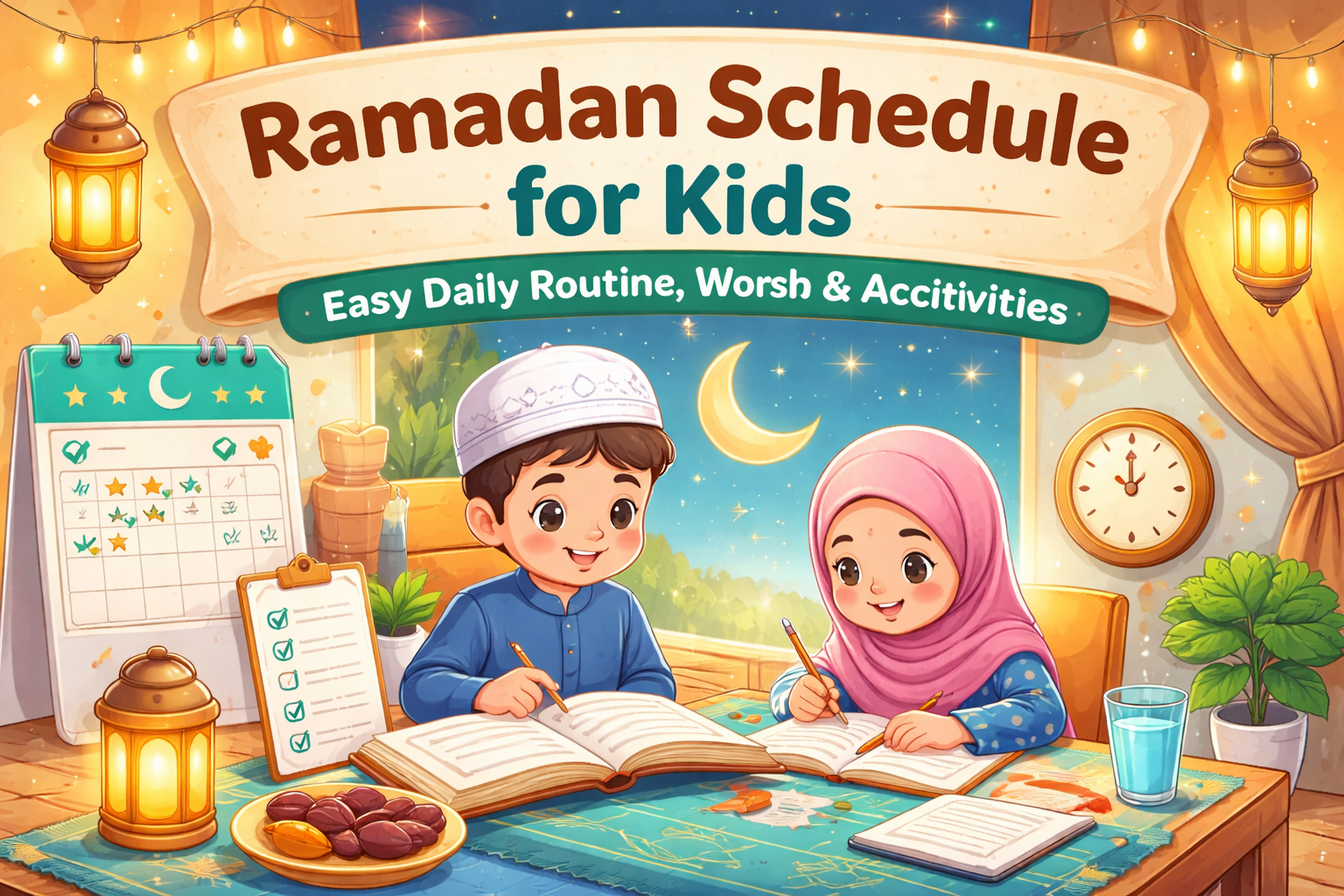
Ramadan is the most blessed month in Islam, and it provides a beautiful opportunity for families to grow spiritually together. For children, Ramadan is not only about fasting but also about learning important Islamic values, building discipline, and developing a connection with Allah and the Quran. Introducing kids to Ramadan through a structured and easy daily routine helps them understand its importance in a positive and meaningful way.
A well-planned Ramadan schedule allows children to balance worship, learning, rest, and enjoyable activities. It helps them stay motivated and prevents them from feeling overwhelmed. By creating a routine that includes prayer, Quran recitation, Islamic learning, and family bonding, parents can help children develop habits that will stay with them for life.
Table of Contents
Why Is Ramadan Important for Kids?
Ramadan teaches children valuable life lessons beyond fasting. Even if younger kids are not required to fast, they can still participate in Ramadan activities.
Key benefits of involving kids in Ramadan include:
- Learning discipline and time management
- Developing a connection with the Quran
- Understanding the importance of prayer
- Building patience and gratitude
- Strengthening Islamic identity
When kids follow a structured Ramadan routine, they feel more engaged and excited about participating in Islamic practices.
Preparing Kids for Ramadan: What Parents Should Do
Before Ramadan begins, parents should prepare children mentally and emotionally. This preparation helps kids adjust easily to the new routine.
Parents can prepare children by:
- Explaining the purpose and importance of Ramadan
- Setting realistic expectations based on age
- Encouraging small acts of worship
- Creating a Ramadan calendar or planner
- Making Ramadan exciting and positive
Preparation ensures that children feel motivated rather than pressured.
Ideal Ramadan Daily Schedule for Kids
Every family has different routines, but a balanced Ramadan schedule should include prayer, Quran learning, rest, and fun activities.
Below is a simple and practical daily routine for kids.
Morning Routine (After Fajr)
The morning is a peaceful and productive time for spiritual activities.
Suggested activities:
- Wake up for Fajr prayer (if age-appropriate)
- Recite or listen to the Quran
- Make simple duas
- Go back to sleep if needed
Morning Quran recitation helps children develop consistency.
Mid-Morning Routine
After waking up properly, children can focus on their daily responsibilities.
Activities may include:
- School (online or physical)
- Islamic studies or Quran classes
- Reading Islamic stories
- Educational activities
This keeps their learning routine consistent during Ramadan.
Afternoon Routine
Afternoons are usually quieter, so children should engage in calm activities.
Recommended activities:
- Rest or short nap
- Quran memorization practice
- Watching Islamic educational videos
- Helping parents with small tasks
Avoid tiring activities to preserve their energy.
Evening Routine (Before Iftar)
This is one of the most exciting times of the day for kids.
Activities include:
- Helping prepare Iftar
- Making dua before breaking fast
- Setting the table
- Learning the Sunnah of Iftar
This builds responsibility and excitement.
Night Routine (After Iftar and Isha)
Evenings are ideal for family worship and bonding.
Activities include:
- Praying Maghrib and Isha
- Attending Taraweeh (if possible)
- Listening to the Quran recitation
- Family Islamic discussions
This strengthens spiritual growth.
Quran Learning During Ramadan
Ramadan is the month of the Quran, making it the perfect time for children to strengthen their connection with it. Parents should encourage daily Quran recitation, even if it is for a few minutes. Consistency is more important than quantity.
Children can practice reading with Tajweed, memorizing short Surahs, and learning the meanings of verses. Joining structured online Quran classes can provide professional guidance and help children improve faster.
Learning the Quran during Ramadan increases rewards and helps children develop lifelong habits. It also builds confidence and strengthens their faith.
Fun and Educational Ramadan Activities for Kids
Ramadan should be enjoyable so children remain motivated.
Fun activities include:
- Ramadan crafts
- Making Ramadan decorations
- Islamic quiz games
- Ramadan reward charts
- Storytelling about Prophets
These activities make learning interactive.
Tips to Help Kids Follow Ramadan Routine Easily
Consistency is key when building habits.
Helpful tips for parents:
- Keep the schedule simple
- Be flexible based on the child’s age
- Encourage, don’t force
- Appreciate their efforts
- Lead by example
Positive reinforcement builds long-term habits.
Teaching Islamic Values During Ramadan
Ramadan is the perfect time to teach children important Islamic values.
Parents should encourage:
- Kindness and good manners
- Charity and helping others
- Patience and gratitude
- Respect and honesty
These values shape their character.
Benefits of Following a Ramadan Schedule for Kids
A structured Ramadan routine helps children in many ways:
- Improves discipline
- Strengthens faith
- Builds love for prayer and Quran
- Improves time management
- Develops positive habit
These benefits last beyond Ramadan.