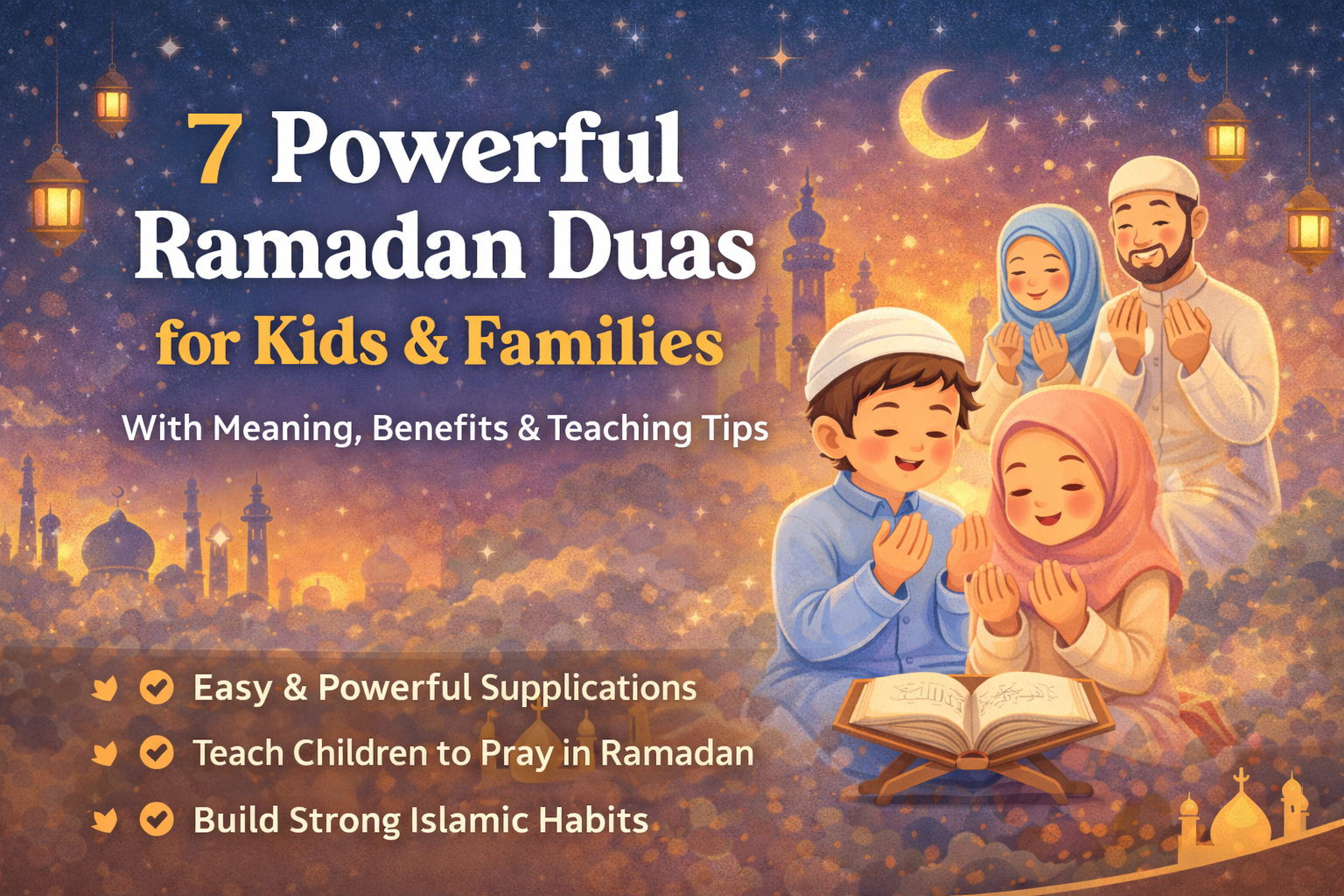
Ramadan is not just a month of fasting, it is a month of mercy, reflection, forgiveness, and spiritual growth. For families, it is also a golden opportunity to nurture faith in children and strengthen Islamic values at home.
Children naturally imitate what they see. When they watch their parents pray, make dua, and speak about Allah with love, their hearts absorb those lessons. Teaching Ramadan duas for kids during this blessed month helps them:
- Build a strong connection with Allah
- Understand the purpose of fasting
- Develop gratitude and patience
- Create lifelong spiritual habits
In this detailed guide, you’ll find 7 powerful and easy Ramadan duas for children and families, along with their meanings, benefits, and practical teaching tips.
Table of Contents
Dua for Intention of Fasting (Niyyah)
Arabic:
نَوَيْتُ صَوْمَ غَدٍ عَنْ أَدَاءِ فَرْضِ رَمَضَانَ
Transliteration:
Nawaitu sawma ghadin ‘an ada’i fardi Ramadan.
Meaning:
I intend to keep the fast for tomorrow in the month of Ramadan.
Why This Dua Is Important for Kids
Fasting begins with intention. Teaching children about niyyah (intention) helps them understand that worship is not just about actions — it starts in the heart.
Even if young children are not fasting the entire day, they can practice saying the intention. It makes them feel included and responsible.
Benefits:
- Teaches accountability
- Builds awareness of worship
- Encourages discipline
Parent Tip: Ask your child before sleeping, “What is your intention for tomorrow?” This makes Ramadan meaningful rather than routine.
Dua for Breaking the Fast (Iftar Dua)
Arabic:
اللَّهُمَّ إِنِّي لَكَ صُمْتُ وَبِكَ آمَنْتُ وَعَلَيْكَ تَوَكَّلْتُ وَعَلَى رِزْقِكَ أَفْطَرْتُ
Transliteration:
Allahumma inni laka sumtu wa bika aamantu wa ‘alayka tawakkaltu wa ‘ala rizqika aftartu.
Meaning:
O Allah! I fasted for You, I believe in You, I trust in You, and I break my fast with Your provision.
Why Kids Should Learn It
The moment of iftar is powerful. It is a time when duas are accepted. Teaching children this dua helps them understand:
- Fasting is done for Allah alone
- Food is a blessing from Allah
- Gratitude is essential
Spiritual Lessons for Children:
- Patience is rewarded
- Allah provides sustenance
- Worship brings joy
Family Practice: Let your child lead the iftar dua at least once a week to build confidence and excitement.
Dua for Forgiveness in Ramadan
Arabic:
رَبِّ اغْفِرْ لِي وَلِوَالِدَيَّ
Transliteration:
Rabbighfir li waliwalidayya.
Meaning:
My Lord, forgive me and my parents.
Why This Dua Is Powerful
Ramadan is known as the month of forgiveness. Teaching children to ask Allah for forgiveness builds humility and self-awareness.
This short and easy dua also teaches children to pray for their parents, strengthening respect and love within the family.
Benefits:
- Encourages empathy
- Teaches respect for parents
- Develops humility
Daily Habit Idea: Recite this dua together after every salah during Ramadan.
Dua for Laylatul Qadr (The Night of Power)
Arabic:
اللَّهُمَّ إِنَّكَ عَفُوٌّ تُحِبُّ الْعَفْوَ فَاعْفُ عَنِّي
Transliteration:
Allahumma innaka ‘afuwwun tuhibbul ‘afwa fa’fu ‘anni.
Meaning:
O Allah, You are Most Forgiving, and You love forgiveness, so forgive me.
Why It’s Essential for Ramadan
This is one of the most important duas of Ramadan, especially during the last ten nights.
Even small children can memorize this because it is short and rhythmic.
Lessons for Kids:
- Allah loves to forgive
- We should forgive others too
- The last ten nights are special
Fun Tip: Create a “Last 10 Nights Dua Chart” and track daily recitation.
Dua for Guidance and Good Character
Arabic:
اللَّهُمَّ اهْدِنِي وَحَسِّنْ خُلُقِي
Transliteration:
Allahumma ihdini wa hassin khuluqi.
Meaning:
O Allah, guide me and improve my character.
Why This Dua Matters
Ramadan is not just about hunger — it’s about improving behavior. Children sometimes struggle with irritability while fasting. This dua reminds them that good character is part of worship.
Teaches Children:
- Kindness
- Patience
- Self-control
- Respect
Family Activity: At iftar, ask everyone to share one way they improved their character that day.
Dua for the Entire Family
Arabic:
رَبَّنَا هَبْ لَنَا مِنْ أَزْوَاجِنَا وَذُرِّيَّاتِنَا قُرَّةَ أَعْيُنٍ
Transliteration:
Rabbana hab lana min azwajina wa dhurriyyatina qurrata a’yun.
Meaning:
Our Lord, grant us from our spouses and children comfort to our eyes.
Why Families Should Recite It Together
This is a beautiful family-focused dua that promotes unity and love. When children hear parents making dua for them, they feel valued and protected.
Benefits:
- Strengthens family bonds
- Promotes love and mercy
- Creates peaceful home environment
Night Routine: Recite this dua together before bedtime.
Dua for Gratitude
Arabic:
الْحَمْدُ لِلَّهِ
Transliteration:
Alhamdulillah.
Meaning:
All praise is for Allah.
Why It’s Important
Gratitude is the heart of Ramadan. Children must understand that fasting helps us appreciate blessings like food, water, and comfort.
Teach them to say “Alhamdulillah”:
- After eating
- After prayer
- When receiving something good
Gratitude builds positivity and contentment.
How to Teach Ramadan Duas to Kids Effectively
Teaching children requires patience and creativity. Here are proven methods to make learning engaging:
1. Use Visual Dua Charts
Children are visual learners. Create colorful Ramadan dua posters and place them in the prayer area or kitchen.
2. Practice Through Repetition
Repetition strengthens memory. Choose one dua per week and repeat it daily.
Explain the Meaning in Simple Words
Avoid complicated explanations. For example:
Instead of saying “seeking divine mercy,” say:
“We are asking Allah to forgive us because He loves us.”
4. Make It Interactive
- Ask children to lead dua
- Create a Ramadan dua jar
- Use reward charts for consistency
Benefits of Teaching Ramadan Duas Early
Teaching Islamic supplications during childhood has long-term spiritual benefits:
- Builds Strong Faith Foundation
- Encourages Emotional Connection with Allah
- Develops Gratitude & Patience
- Strengthens Family Unity
- Creates Lifelong Worship Habits
Ramadan becomes more than a cultural event; it becomes a spiritual experience.
Frequently Asked Questions (FAQs)
1. At what age should kids start learning Ramadan duas?
Children as young as 3–4 years old can begin memorizing short duas like “Bismillah” and “Alhamdulillah.”
2. Do children need to fast to learn Ramadan duas?
No. Even if they are not fasting fully, they can still participate in learning and reciting duas.
3. How can I motivate my child to learn duas?
Use positive reinforcement, small rewards, praise, and family participation.
Final Thoughts
Ramadan is a beautiful opportunity to plant seeds of faith in young hearts. Teaching your children simple and meaningful Ramadan duas will help them develop a deep love for Allah and worship.
Start small. Be consistent. Make it joyful. May Allah accept your fasting, forgive your sins, and bless your family with faith, unity, and peace. Ameen.